The History of Concubine Lane in Ipoh
October 2022
Known mostly by travellers as the gateway to the Cameron Highlands, the British Colonial city of Ipoh is also known for it’s street art and street food. Ipoh is the capital city of Malaysia’s Perak state, lying 200km North of Kuala Lumpur. In 2010, it was named as Malaysia’s fourth largest city by population, and lies alongside the Kinta river.
The bus to Ipoh (from KL) is relatively straightforward, comprising of one direct route taking approximately 2.5 hours, running at multiple times per day. Once in Ipoh, you can travel around by Grab or local bus – or of course on foot if located centrally.
We initially only stayed in Ipoh for 1-night, as our stop-over between KL and the Cameron Highlands. We had a Workaway booked following our trip to the Cameron Highlands, so knew we would be returning a week later to explore further if needed. Because of this, the one night was all we needed. You can find a separate blog post on our return trip below.
Our Workaway experience with a local family in Ipoh, Malaysia.


We stayed in My Town Hotel OYO within Little India, being around 10-minute walk from the hustle and bustle of the Old Town centre – and main tourist hotspot of Concubine Lane. The hotel was basic, but was fine for the one-night and a good location.
You can book the hotel we stayed at here.
Concubine Lane
Concubine Lane is said to be of similar nature to Malacca’s Jonker Street, but on a much smaller scale. You can find similar street vendors when the markets are open. There are also an array of shops, quirky cafe’s and restaurants.


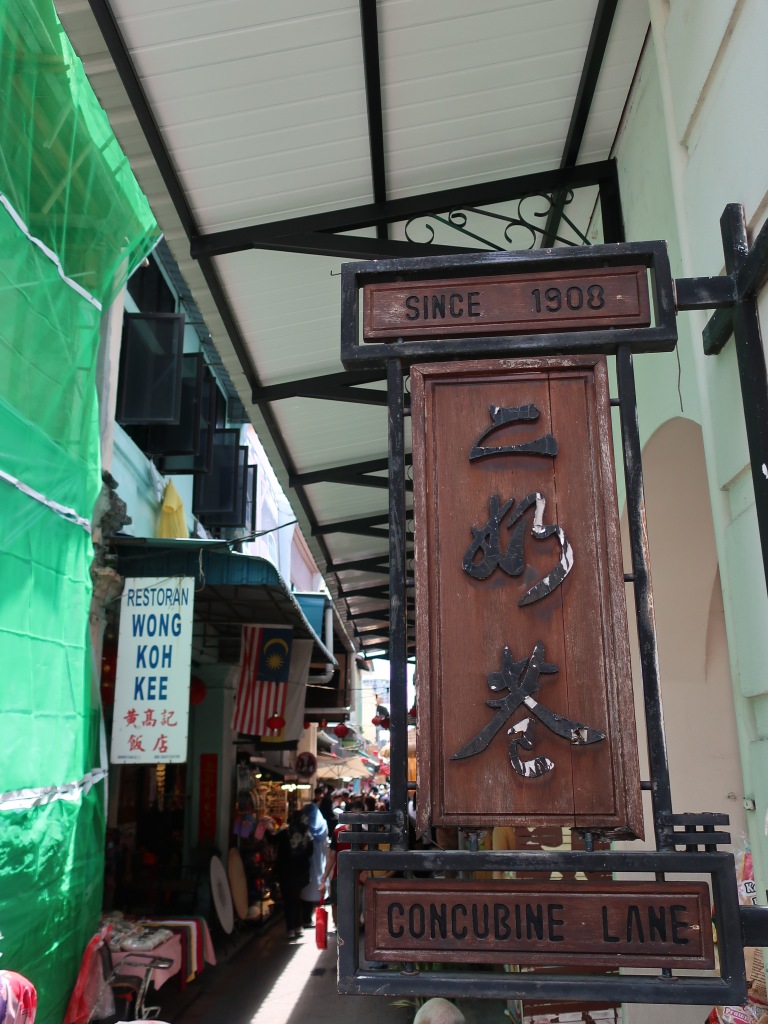
Concubine, or Mistress Lane is a narrow alleyway essentially, within Ipoh’s old town. Whilst just the singular Concubine Lane tends to be the most famous, there are in fact three. The history of the Concubine Lane’s began in 1892 when a fire destroyed a lot of the city. When it was re-built, these narrow alleyways of shops were produced. Well-known mining millionaire Yao Tet Shin assisted with the reconstructed and then gifted three of these new lanes to his three wives. In terms of understanding he of course had his first wife, with the second being known as his concubine, and his third his second concubine. These lanes became Hale Lane (originally Wife Lane – Lorong Hale 大奶巷), Concubine Lane (originally Lorong Panglima 二奶巷) and Market Lane (三奶巷) respectively.
Rokiah Kopitiam Cafe
Situated on the Eastern corner of Concubine Lane is ‘Rokiah Kopitiam’ Cafe. We stumbled in here when looking for a bite to eat, but didn’t know what to order off of the menu (mostly in Malaysian with little English translation.) We asked the boy behind the counter for some recommendations, and ordered the Yong Mee Curry. He said it’s his mum’s recipe, and his personal favourite. This turned out to be one of the best meals I ate in Malaysia – it was delicious – and for once – not too spicy!
Harry Potter Cafe
If you’re a Harry Potter fan, there’s an all singing and dancing Harry Potter cafe located on Concubine Lane called Platf9rm. I didn’t go in so cannot review too much, but it definitely looked enticing from the outside!


Book Shop
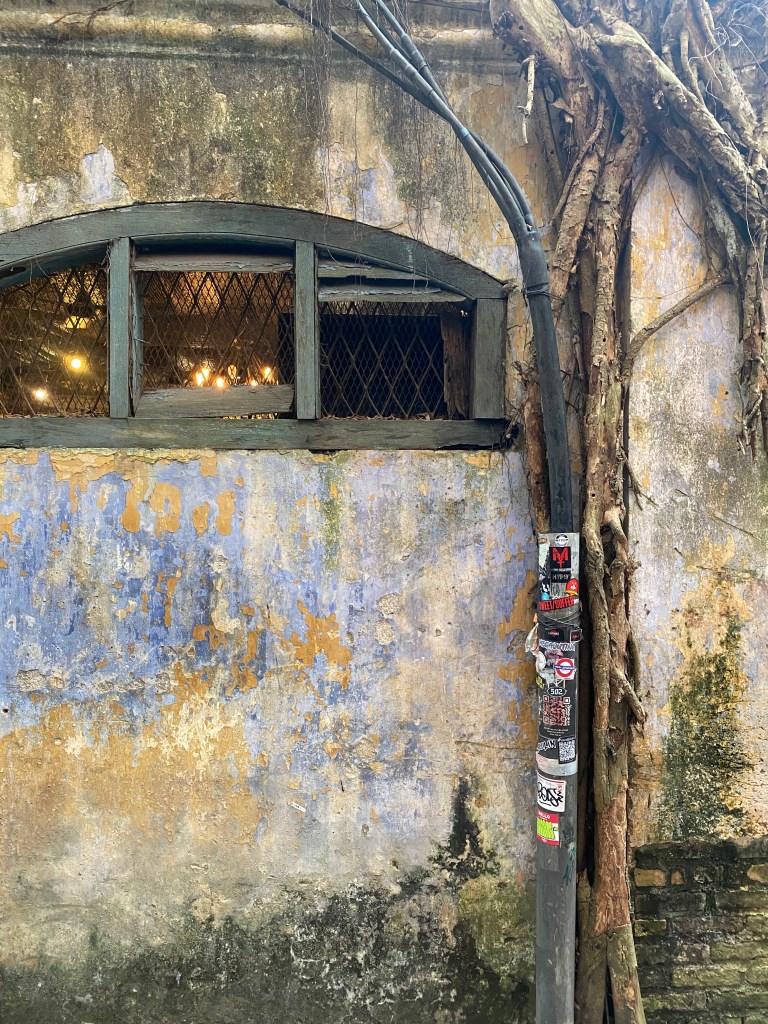
On the Western end of the Lane (or entrance) where the sign is, there’s a cute and quirky book shop that id definitely worth exploring – and a nice escape from the heat! The first floor you enter on is full of Children’s books, games and stationary but if you head towards the back of the store, there is a dark staircase with neon lights that takes you down into the basement – you can see these lights through the windows of Concubine Lane which is what attracted us inside in the first place. Downstairs are hundreds of books, ranging from general fiction and non-fiction to locally written books and a small exhibition.
Yasmin Ahmad Exhibition

Whilst it most likely changes, the current exhibition was on Yasmin Ahmad – who was a Malaysian film director and writer. On exhibition were her scripts, various photo’s and clips of films she’d been involved in. She was also involved in the production of many TV commercials, known in Malaysia for their comedic yet touching nature. She’s known for being the first director to produce films that explore the race and identity journey of Malaysians, that had not dared be explored prior. She explored a new understanding of Malaysian society and was often seen as controversial. Yasmin sadly passed away in 2009, aged 51 after suffering a stroke. One of my favourite pieces within her exhibition read:
‘It is perfect to be imperfect, because perfection is made up of many imperfections put together that makes it perfect’ – Yasmin Ahmad
 Wild Rose Travel